Why?

This blog is to help you in preparing for an emergency. It also contains other information that you might find spiritually up-lifting. This is not an official website of "The Church of Jesus Christ of Latter-day Saints". This site is maintained by Barry McCann (barry@mail.com)

Sunday, October 12, 2014

How to Make Homemade Waterproof Matches

Whether you are getting ready for a weekend camping trip, a natural disaster, or the end of the world, you are going to need something to start a fire with. A fire starter is possibly the most important item that you should have in your backpack or bug out bag.
There is no point in having a survival gear bag without a box of matches, ideally the waterproof and windproof variety.
Otherwise you could end up in a situation where you will not be able to eat or keep yourself warm, both of which will reduce your chances of surviving.
Don’t have any of those handy?  Thats perfectly fine, you have another option.
You don’t have to buy expensive waterproof matches; instead, you can simply make your own, for a fraction of the cost!.
If you have a box of matches and just a few common materials you’ll be ready to start a fire in the pouring rain in no time!
To learn how to make your own waterproof matches, read the full article here.
DIY waterproof matches
waterproof matches

4 Different Ways To Make Homemade Waterproof Matches

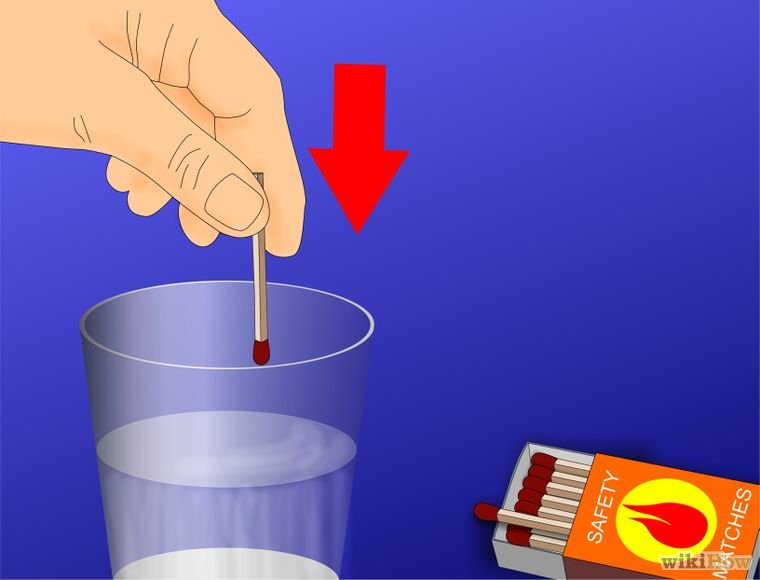
Method One of Four:Use TurpentineThe BEST & SAFEST Method is to use Turpentine. (Turpentine has a higher “flash point” relative to Acetone, which commonly used in Nail Polish. Nor does it involve the use of flame as is needed in the Wax or Paraffin methods.) 1. Pour 2 to 3 large tablespoons of Turpentine into a small (Tumbler sized) glass.
DIY waterproof matches
turpentine
2. Place the matches, (Head down) into the Turpentine and allow the matches to soak for 5 minutes. During that time the turpentine will soak into the head as well as the stem. All the water will be driven off by the turpentine.
homemade waterproof matches
dip the matches
3. Remove the matches and spread them out to dry out on a sheet of newspaper. Generally, 20 minutes for excess turpentine to be evaporated is recommended. Matches treated in this way remain waterproof for several months or longer.
DIY waterproof matches
dry them out
Method Two of Four: Use Nail Polish 1. Dip the head end of the match into clear nail polish far enough to cover at least an eighth of an inch (3 millimeters) of the stick below the head.
homemade matches waterproof
dip in nail polish
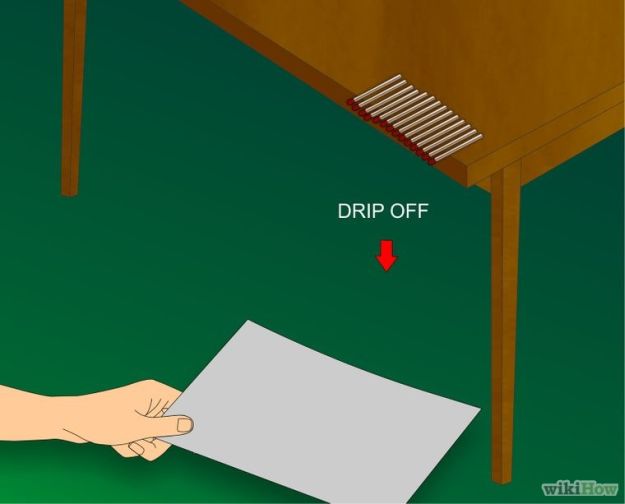
2. Hold the match for a few seconds to allow the polish to dry and then place the match on a table or counter so that the head is suspended off the edge of the surface.
how to make matches waterproof
drying the polish
3. Place a sheet of newsprint below to catch anything that may drip off.
make survival matches at home
catch excess nail polish
Be sure to read the rest of the article and learn all four methods here.
If you find yourself outdoors and unable to start a fire simply because your matches are wet,  is not only frustrating, but potentially life threatening. Fire is the key to survival in the wilderness, emergencies and even a few everyday situations, and if you are unable to start a fire when you need it most, you could be in serious jeopardy It provides light, warmth, protection from predators, and heat for preparing food.
A box of waterproof matches is definitely an essential survival tool. With so many ways to make waterproof matches, there is no reason to buy the ready made products. Homemade waterproof matches can be very handy in bad situations, especially when you are outdoors. But you never want to rely on matches alone,  make sure that you know at least three different ways to start a fire!

Friday, October 10, 2014

Wood Burning 101 and Alternatives

Wood Burning 1903-2TThe wood burning stove or more affectionately the wood stove was a mainstay and center of many a home, giving up dominance as a necessary appliance in the home to the likes of coal, natural gas and electricity. The woodstove gradually lost its dominance on the heating scene bit by bit with the passing years and inventions, the stove and its predecessor the fireplace became more an aesthetic decoration rather than the efficient appliance it is, being relegated to the alternative section.
Wood Burning BunBaker1500-2T-70x108For years the wood stove whether it be the cook-stove, trash burner, pot belly or wood heater were gathering places in the home or even general store where friends and family gathered to warm themselves before the bone soaking heat emanating from the stove. Anyone experiencing the wood stove will surely tell you there is no warmer heat than that of the wood stove. Alas the stove fell out of favor with claims it was a dirty heat, took up to much space, was time consuming to prepare for and all in all an antiquated way to operate. Never mind the old saying heating with wood warms you twice, or that the heat actually felt warmer, or that the fuel it consumes is renewable. No matter the virtues the stove was pushed out into the shed, dump or recycled.
Wood Burning tribute_seafoam290-108x108Thankfully those wise ones among us who never throw the babe out with the bathwater kept the flame alive. In the course of history thankfully there have been those who see true value, in the late 60’s and 70’s they were called back to the landers or a few other names. I well remember the 1970’s issues of Mother Earth News whose homey pages were stuffed with homesteading and what we now look at as survival and prepper skills. The Wood Stove graced the pages frequently and a resurgence of the wood stove flourished and has waxed and waned over the past 30 years. Today the wood stove, an even more efficient and economical heat source is keeping pace with industry standards and is in fact replacing those heaters that once pushed it out. 

Thursday, October 9, 2014

Communicate Off the Grid with Satellite Phones

shutterstock_107724728It seems like hardly a week goes by without news of another cyber threat that has compromised a supposedly secure website. The people responsible for these hacks aren’t the only ones we should be watching, however. The bigger threat for the average American are potential attacks on the electrical and communication grids, according to lengthy reporting from the Pittsburgh Post-Gazette. Experts who advise on security for the power grid recently told the Gazette that hackers and geo-terrorists can learn the same technologies that run the grid. In addition, the grid is open to thousands of users today, increasing the number of access points.
Luckily, many people today are prepared to live off the electrical grid, thanks to solar technologies and other renewable sources that can be easily set up. But what about communicating off the grid?

Grid-Free Telecommunications via Satellite

You’ve likely heard of satellite phones, which don’t require cell phone towers to work. Rather, they connect to satellites orbiting the earth and are the tools of choice for people who travel to remote locations outside of cell phone coverage range. People use them on boats, hiking around national parks and when visiting parts of the world where you can’t take a selfie to upload to Facebook.
Today, consumers are finding that satellite phone technology is more accessible than ever. So how can satellite phones work without the benefit of electrical charging? Easy. Most of them have solar recharging technology or are compatible with solar recharging devices.

Benefits and Limitations of Satellite Phones

Satellite phones are not intended to replace cell phones, which remain a good tool to keep with you at all times. Here are a few limitations to keep in mind:
  1. Satellite phones need to access the sky so they only work outdoors.
  2. They need external antennae to do this.
  3. They are heavier than cell phones.
  4. Their bandwidth is compromised for power so voice quality isn’t as strong as that of Smartphones.
The major benefit is that satellite phones work all the time. Even violent storms won’t stop one from communicating. And depending on the service provider you select, you can get continent-wide or global coverage.

Get a Phone that Fits Your Present Lifestyle

Today’s power failures are rarely scheduled, so get a satellite phone that works for your life as it is now. Here are a few factors to consider:
If you work or live in an urban area, go for a smaller one—about the size of two packs of cigarettes, back-to-back, with a stubby antenna and a belt clip loop.
Iridium phones and its satellites are built for those who live or travel to remote sites. The backcountry skiing blog Wildsnow.com notes that Iridium works all over the world, although its connection can be a bit slow.

Tuesday, October 7, 2014

"Nobody Has Any Idea How Disastrous It's Going To Be" Warns California Water Expert "Do you know how much of our food comes from California?"

Newly released images created from NASA satellite data illustrate the staggering effect the California drought has had on groundwater supply in the state. As Mashable's Patrick Kulp explains, the images show theamount of water lost over the past 12 years, with different colors indicating severity over time. “Nobody has any idea how disastrous it’s going to be,” Mike Wade of California Farm Water Coalition told the Associated Press, as RT reports a growing number of communities in central and northern California could end up without water in 60 days due to the Golden state’s prolonged drought. While California is bearing the brunt, experts note "We're seeing it happening all over the world, in most of the major aquifers in the arid and semi-arid parts of the world."
California is currently experiencing the third year of one of the most severe short-term droughts ever recorded. Data from U.S. Drought Monitor shows that as of Sept. 30, 82% of the state is facing extreme or exceptional drought conditions.

But the state is not the only area being plagued by critical drops in groundwater reserves. Data collected by GRACE indicates that the supply of groundwater is in decline worldwide, especially in regions that rely on it most.

"We're seeing it happening all over the world. It's happening in most of the major aquifers in the arid and semi-arid parts of the world where we rely on those aquifers. But we're able to see now the impact we're having on this over exploitation," Famiglietti told Science Magazine.
But it's getting extremely serious in California (as RT reports),
A growing number of communities in central and northern California could end up without water in 60 days due to the Golden state’s prolonged drought.

There are now a dozen of small communities in Central and Northern California relying on a single source of water – which has the water resources board concerned they will not have any at all in two months’ time. 

At a mobile home park north of Oroville, more than 30 families are severely cutting back. The water supply is so tight it is shut off entirely between 10 pm and 5 am, according to CBS Sacramento. The families are relying on one well – all the others have dried up – and have to drive five miles to buy drinking water for themselves and their animals.
*  *  *
In conclusion...
“Nobody has any idea how disastrous it’s going to be,” Mike Wade of California Farm Water Coalition told the Associated Press.

Saturday, October 4, 2014

Alternate Heat/Cooking Sources are Important

Especially if you live in areas that are extremely cold. Some of the more obvious things you probably already have are extra blankets, sleeping bags, warm shoes batteries/flashlights etc… A few things you may not of thought of might be….
sheep_wool_products

Wool Socks, wool cap/beanie, and/or gloves: Wool will help trap the heat in where it escapes the most. Your head, hands and feet so that your body stays warm.


big-buddyMr. Heater: If you have a fireplace,wood stove or generator then you are good to go my friend, but if not then you should consider at least one or two alternate sources of heat for your family. Based off of friends advice and much research we purchased a Mr. Heater as our alternate source for now. It can be run off two small portable camping propane tanks. (Like the ones used on a Coleman camp cook stove.) Or a bigger Grill style tank. (make sure to purchase the longer hose and adapter for the bigger tanks.) The Big Buddy 18,000 BTU/HR capacity can heat up to 400 sq ft. The Big Buddy combines radiant heat with convection heat air flow for maximum heating efficiency. Multi-position heat settings control comfort level. Built-in low oxygen sensor and tip over switch ensure safe, reliable confident operation. It has an easy-carry handle with built-in blower fan to circulate heated air for higher heating efficiency. Blower fan operates on 4D-cell batteries or with optional 6-volt A/C adapter. As with grilling it is very important to make sure all of the propane is out of the hose once you turn it off.
(Updated Note: I received some excellent advice on my Facebook page to help improve owning these heaters. He recommended to also invest in deep cycle batteries, a small power inverter and small solar panel. With those we should be good to go for heat. Thanks for the advice my fellow prepper!)
71bmSDIoeHL._SL1500_Heat Inserts/ Body Warmer: These are great because they can be tucked in almost anywhere at any time for warm up hands, feet, toes, or pockets.

gas-electric-burners-200x-NO-150x150


Alternative Cooking Sources are very important as well so that you are able to cook what ever is in the fridge once the power is out. Stock up on some charcoal and propane for those grills!! For some wonderful ideas on alternate cooking sources please click here.
Rock Salt to melt ice on the stairs and other important areas out side of your home is a very important thing to consider adding to your garage. Rock salt is very cheap and well worth it compared to the cost of a broken bone, physical therapy or a trip to the emergency room. We also keep a small container of this in the back of our vehicle during winter in case we ever need to get out of a bad situation. For a detailed list of some items you might want to add to your EDC Car Kit, click here.)
51CTFOC6J+LCommunication is important. Always keep your phones, tablets and lap tops charged with an extra battery back up. A solar charger is a wonderful addition to your preps in case you lose power for more than a day or two. If your able to drive out of your area then you can always take advantage of outlets restaurants provide to customers. It is always wise to have an emergency weather radio for updates on the conditions in your area. The one we have chosen to use is the Ambient Weather WR112 Emergency Solar Hand Crank Weather Radio, flash light, smart phone charger, with weather alert siren.
Medications: Have a supply of ever family members medications in one spot along with a print out of each persons medical history and their doctors information. This is very important in case you get trapped inside for several weeks or have to evacuate your home. The last thing you want to do is search for your medicines and hope you got everything if you have 20 minutes to get out of dodge.
Depending on where you live, this is a *very basic* list of things you should consider having around before winter strikes this year. Every person will have different needs, but if you cover Water, Food, Heat, Communication and a way to cook then you should be able to make it just fine until power comes back on. Have an evacuation plan ready to go and practiced with your family just in case you need to leave your home for a short time. Remember, being prepared is what saves your life….not the government.

Thursday, October 2, 2014

GENETICALLY MODIFIED RICE TRIAL REPORTS 3 TIMES HIGHER LEUKEMIA RISK

It appears that an alleged illegal GM rice trial on University students in China has led to an incidence rate of acute leukemia of up to 3 times the normal rate in the country. Following the alleged GM rice trial, it was discovered from the Huazhong Agricultural University that ‘over 10 students now have leukemia within a 4-year period.’

The students claim that:

“When we entered the University, the school required all students to promote genetic modification (GM), upon entering the University, our teacher told us that the rice used by our canteen is GM rice from the university’s experimental base.”

Normally, leukemia among young adults in China is about 2 to 3 cases per 100,000 people. In the case of the students claiming to be fed GMO rice at the University’s base, the rate is at least three times higher. Seven students are on record now as having developed the disease.

These accusations are corroborated by a study conducted by Brazilian researchers, one which showed that Bt toxins found in GM rice are toxic to the blood of mice and cause red blood cells to rupture.

“Hematotoxicity of Bacillus thuringiensis as spore-crystal strains Cry1Aa, Cry1Ab, Cry1Ac, or Cry2Aa in Swiss albino mice” suggests there could be a link between Bt toxins and leukemia.

Chen I-wan, an Advisor to the Committee of Disaster History to the China Disaster Prevention Association, suggested Thursday that:

“The Supreme People’s Procuratorate, the Ministry of Public Security, the National People’s Congress and the Chinese People’s Political Consultative Conference (CPPCC) should jointly organize a working team to enter the Huazhong Agricultural University and investigate if Zhang Qi-fa, the chief developer of Chinese GM Bt rice, influenced the University to feed GM Bt rice to the students on a regular basis, and if the fact that the leukemia incidence rate of the students at the Huazhong Agricultural University is about three times the normal incidence rate. And, if this is basically verified, then they should sue those responsible with public prosecution based on “endangering public security by dangerous means!‍””

The University Students’ accusations come on the heels of a CCTV report last month, which revealed that unapproved GMO Rice was discovered in two southern China provinces.

Wednesday, October 1, 2014

Emergency Lighting | Flashlight Power

Flashlight technology has come a long way since 1899 when British inventor David Misell obtained a U.S. Patent for an “electric device” using newly-invented “D-size dry cell” batteries. When he introduced the hand held light he initiated a revolution in lighting. Since then, flashlight design has made remarkable progress. Both light bulb and battery technology improved significantly, and the trend is continuing.

The Basics of Flashlights

The flashlight uses batteries that contain stored DC energy. Connecting several batteries together (in series) with a conductive metal strip, an on-off switch, and a bulb creates a flashlight. When the on-off switch or button on the flashlight is closed the circuit is complete and the bulb lights. Add more batteries and a different bulb and you can realize an even brighter flashlight. The flashlight can be left energized providing continuous light until the batteries discharge. Then the light bulb goes out and you must install new batteries to get the light back on.
emergency flashlight
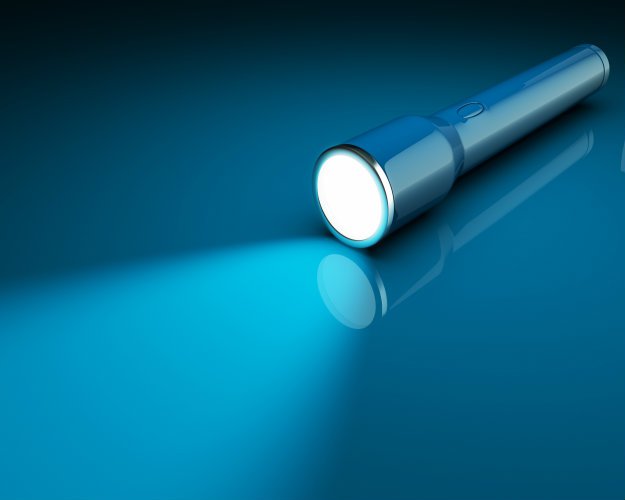
The flashlight is a portable source of illumination
A flashlight creates a beam of light that illuminates objects nearby or distant depending on the power and shape of the light beam. As the distance from the flashlight increases, the beam spreads out and the illumination gets dimmer. The beam can be broad or narrow depending on the flashlight’s design, creating a spot light or a flood light..
Consumers evaluate and compare flashlights by the lumens of light produced, the strength (reach) of the light beam, and how long the battery will last. Size and weight have consistently been reduced so today portable lights like these can weigh just ounces.
A flashlight can produce light output from less than a lumen to over 3,000 lumens. Just 20 lumens is all the light you need to read this article in a dark room. I remember when I was a boy and it was bed time. I often hid under the blankets reading comic books with a flashlight until I became too tired to stay awake. That makeshift light worked well in my small reading cave.

Flashlight Designs

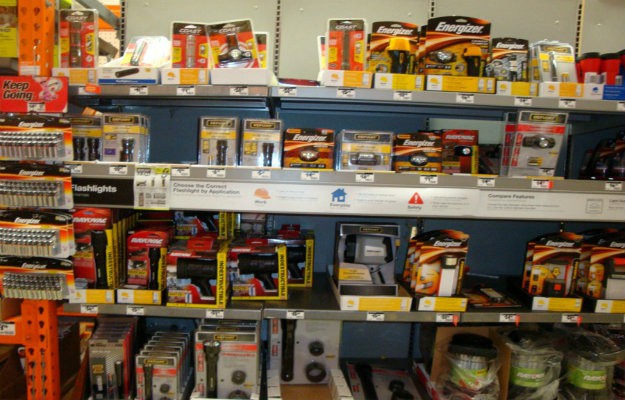
Today there are hundreds of flashlight designs for sale. A visit to a local home improvement or camping supply store will show a myriad of selections.
You’ll find penlights powered by a single AA or AAA battery. You’ll find handheld flashlights sized from several inches to over a foot long with batteries that energize tiny incandescent or LED bulbs. And you’ll see keychain flashlights, general purpose household flashlights, spotlights, floodlights, tactical lights, headlamps that provide hands-free movement, and even use-once glow-sticks that give off a greenish light for up to 12 hours. And there are multimode flashlights with switchable brightness controls that make the device bright, dim, strobe, or flash an SOS in Morse code. I even found a few flashlights with a zoom capability and multiple brightness levels. The ingenuity of the human mind is endless.
flashlight varieties
Flashlights come in many sizes, shapes, and prices
One type of multimode flashlight uses two double-A (AA) alkaline or nickel-metal-hydride(NiMH) rechargeable batteries and has three brightness settings—the standard setting will keep the bulb energized by alkaline batteries for just over two hours. The NiMH batteries will keep the light energized longer (about 3.5 hours). Switch to bright light and the batteries will last a little over an hour. Set the flashlight to the lowest (dim) setting and the batteries will keep the light bulb energized for over nine hours.

Incandescent vs. LED

Most families have at least one incandescent bulb flashlight, but light-emitting diode (LED) flashlights are rapidly becoming the norm. The LED light uses less battery power, is brighter, and lasts longer than its incandescent predecessor. An incandescent bulb can produce 8-10 lumens per watt. An LED can produce 100 lumens per watt, but LEDs need more battery voltage to operate (3.4 to 3.7 volts versus 1.5 volts for incandescent). This is why keychain lights and tiny penlights still use 1.5 volt incandescent bulbs.
Incandescent flashlights using alkaline dry-cell batteries have been the standard for years while small LEDs were used mainly as low-power indicator lights. Then in 1999 a white light LED flashlight using grouped LEDs was invented, creating bright light with efficiency and run times exceeding that of incandescent flashlight bulbs. As the popularity and use of LED flashlights continues, they are replacing the incandescent as the practical flashlight of choice for main use lighting.

Flashlight Performance

For emergency lighting, you don’t need the 100 to 250 lux (929 to 2,300 lumen brightness) common to room light with full electrical power. When power is out, 35 to 100 lumens will usually suffice for brightness during normal use with 8 to 20 lumens adequate for moving about between rooms. The idea is to use natural light during the day and emergency lighting after dark—adopting a circadian schedule whereby sleeping prevails at night and most of your activity occurs during daylight..
Once you decide on the purpose you intend for the flashlight you seek, selection is made by performance. Here you want to know lumens of brightness, how far the light beam is usable, the type of battery and how long it will provide power to produce light.
In 2009, the American National Standards Institute (ANSI) published test and rating standards for all flashlights (FL1). Manufacturers were asked to print performance test results on the packaging. This is why you’ll often see FL1 standard values such as lumens, beam range, run time, and candela with signature icons printed on the front of many flashlight packages.

Flashlight Brightness

Flashlights with brightness between 1 and 20 lumens are good for key chains or small lights. A green glow-stick produces 0.6 lumens of light. A general purpose flashlight produces 30 to 100 lumens of brightness. A heavy-duty flashlight will produce 200 to 300 lumens of light. And high powered flashlights produce 1,000 up to 3,500 lumens.
The beam or throw value describes how far the light beam will shine (in meters) before the illuminance falls to 0.25 lux (the illumination of a full moon on a clear night). By mounting mirrors in a room and shining a flashlight up towards the ceiling you can reflect the light beam and increase the overall brightness effect in the area. Reflectors are included in flashlights to focus the beam and fix the beam width angle. Angles of 20 degrees or more are considered flood lights.

Run Time and Batteries

Run time describes how many hours the light can operate before the battery driving the lamp discharges to 10% of the voltage of a fresh battery. Many manufacturers make a graph showing light performance over time. These are usually available on their website or product literature.
The type of battery used in a flashlight is important in determining run time. Batteries can be disposable, rechargeable, or renewable using an external source of energy—think solar and think manual hand crank.
Battery types include alkaline and lithium disposable batteries, and lithium-ion (Li-ion), nickel cadmium (NiCd), andnickel-metal-hydride (NiMH) rechargeable batteries. Lithium batteries cost more than twice that of alkaline batteries, but lithium batteries often last many hours longer. Lithium batteries should not be interspersed with alkaline batteries—use alkaline with alkaline, lithium with lithium.
With the rechargeable batteries, nickel-cadmium batteries give you the most recycles (up to 1,500) followed by Li-ion with between 500 and 1,000 cycles. NiMH batteries are good for between 150 and 500 cycles.
Some consumers select emergency flashlights that all use the same type of battery so they have a simpler stocking issue. Others choose any type sold in stores because they want to have multiple options should the stores run low. The key is to have a good stock of back-up batteries on hand.

Emergency Flashlights

One popular flashlight design that proved itself during emergency power out conditions is theheadlamp. It’s also called a headlight. This device channels light to a specific area. Headlamp batteries can produce 11 to 120 lumens of light and last for 150 hours or more. You need brightness reaching out about seven feet for walking at night. Lithium batteries are typically not used in headlamps. For example, the Rayovac 120 lumen headlight uses three AAA batteries.
Headlamp/Headlight products produce between 11 and 120 lumens, with a reach between 9 and 40 meters, and a run time between 5 and 12 hours. They cost between $14 and $20 each. Some of these have multiple modes of operation.
Flashlight options went from 8 to 3500 lumens and reached out (beam throw) 12 to 391 meters, with operational battery lives between 1 and 50 hours on the brightest setting. Prices varied from $1.97 up to $70 with incandescent versions selling for much less than products using LED s.
Cell phones are another form of emergency light. According to comments on various forums, cell phones are available with flashlight capability in the 8, 12, 16, 25, 40, or 50 lumen range of brightness—suitable for finding a keyhole, a light switch, or to illuminate your way through the house.
A category of lighting called “every day carry” (EDC) covers devices that are used working or emergency lights. The most popular EDC light manufacturers (in order of mention) are Fenix (23.8%), Streamlight (10.5%), Preon (5.6%), and Surefire (4.9%).
What are the most popular flashlights used by actual emergency survivors? To determine this, I read blogs and case studies covering major emergency events when electrical power was lost for over three days. I found over 60 makers and types of flashlights, head lamps, pen lights, and lanterns being used during these incidents. I also read flashlight product reviews.to see what products are most popular today.
Five manufacturers were mentioned the most—Fenix (13.3), Maglite (13%), Streamlight (10%), UltraFire (6.7%), and Inova (3.3%).
Survivors who prepared for emergencies selected multiple forms of lighting—headlamps (one per person), small penlights or key chain lights, LED flashlights with various brightness, beam distances and run times, and 360° illumination lanterns. By judicious use of these resources, few survivors ran out of light and battery power. They used ceilings, walls, and mirrors to enhance light coverage. And they turned them on only when being used thus extending the run times out for days or weeks. A number of these survivors commented that neighbors, who failed to prepare, often found themselves stuck with flashlights that ran out of battery power causing them to frantically scrounge around to find or borrow replacement batteries. Failing to plan is planning to fail, and this adage showed up often during these emergencies.
By positioning flashlights around your home so you always have access to a device, you’ll never be left in the dark more than a few seconds when a power outage occurs at night. Here’s where knowledge is power—light power.

Tuesday, September 30, 2014

The U.S. Government Is Borrowing About 8 Trillion Dollars A Year

I know that headline sounds completely outrageous.  But it is actually true.  The U.S. government is borrowing about 8 trillion dollars a year, and you are about to see the hard numbers that prove this.  When discussing the national debt, most people tend to only focus on the amount that it increases each 12 months.  And as I wrote about recently, the U.S. national debt has increased by more than a trillion dollars in fiscal year 2014.  But that does not count the huge amounts of U.S. Treasury securities that the federal government must redeem each year.  When these debt instruments hit their maturity date, the U.S. government must pay them off.  This is done by borrowing more money to pay off the previous debts.  In fiscal year 2013, redemptions of U.S. Treasury securities totaled $7,546,726,000,000 and new debt totaling $8,323,949,000,000 was issued.  The final numbers for fiscal year 2014 are likely to be significantly higher than that.
So why does so much government debt come due each year?
Well, in recent years government officials figured out that they could save a lot of money on interest payments by borrowing over shorter time frames.  For example, it costs the government far more to borrow money for 10 years than it does for 1 year.  So a strategy was hatched to borrow money for very short periods of time and to keep "rolling it over" again and again and again.
This strategy has indeed saved the federal government hundreds of billions of dollars in interest payments, but it has also created a situation where the federal government must borrow about 8 trillion dollars a year just to keep up with the game.
So what happens when the rest of the world decides that it does not want to loan us 8 trillion dollars a year at ultra-low interest rates?
Well, the game will be over and we will be in a massive amount of trouble.
I am about to share with you some numbers that were originally reported by CNS News.  As you can see, far more debt is being redeemed and issued today than back during the middle part of the last decade...
2013
Redeemed: $7,546,726,000,000
Issued: $8,323,949,000,000
Increase: $777,223,000,000
2012
Redeemed: $6,804,956,000,000
Issued: $7,924,651,000,000
Increase: $1,119,695,000,000
2011
Redeemed: $7,026,617,000,000
Issued: $8,078,266,000,000
Increase: $1,051,649,000,000
2010
Redeemed: $7,206,965,000,000
Issued: $8,649,171,000,000
Increase: $1,442,206,000,000
2009
Redeemed: $7,306,512,000,000
Issued: $9,027,399,000,000
Increase: $1,720,887,000,000
2008
Redeemed: $4,898,607,000,000
Issued: $5,580,644,000,000
Increase: $682,037,000,000
2007
Redeemed: $4,402,395,000,000
Issued: $4,532,698,000,000
Increase: $130,303,000,000
2006
Redeemed: $4,297,869,000,000
Issued: $4,459,341,000,000
Increase: $161,472,000,000
The only way that this game can continue is if the U.S. government can continue to borrow gigantic piles of money at ridiculously low interest rates.
And our current standard of living greatly depends on the continuation of this game.
If something comes along and rattles this Ponzi scheme, life in America could change radically almost overnight.
In the United States today, we have a heavily socialized system that hands out checks to nearly half the population.  In fact, 49 percent of all Americans live in a home that gets direct monetary benefits from the federal government each month according to the U.S. Census Bureau.  And it is hard to believe, but Americans received more than 2 trillion dollars in benefits from the federal government last year alone.  At this point, the primary function of the federal government is taking money from some people and giving it to others.  In fact, more than 70 percent of all federal spending goes to "dependence-creating programs", and the government runs approximately 80 different "means-tested welfare programs" right now.  But the big problem is that the government is giving out far more money than it is taking in, so it has to borrow the difference.  As long as we can continue to borrow at super low interest rates, the status quo can continue.
But a Ponzi scheme like this can only last for so long.
It has been said that when the checks stop coming in, chaos will begin in the streets of America.
The looting that took place when a technical glitch caused the EBT system to go down for a short time in some areas last year and the rioting in the streets of Ferguson, Missouri this year were both small previews of what we will see in the future.
And there is no way that we will be able to "grow" our way out of this problem.
As the Baby Boomers continue to retire, the amount of money that the federal government is handing out each year is projected to absolutely skyrocket.  Just consider the following numbers...
-Back in 1965, only one out of every 50 Americans was on Medicaid.  Today, more than 70 million Americans are on Medicaid, and it is being projected that Obamacare will add 16 million more Americansto the Medicaid rolls.
-When Medicare was first established, we were told that it would cost about $12 billion a year by the time 1990 rolled around.  Instead, the federal government ended up spending $110 billion on the program in 1990, and the federal government spent approximately $600 billion on the program in 2013.
-It is being projected that the number of Americans on Medicare will grow from 50.7 million in 2012 to 73.2 million in 2025.
-At this point, Medicare is facing unfunded liabilities of more than 38 trillion dollars over the next 75 years.  That comes to approximately $328,404 for every single household in the United States.
-In 1945, there were 42 workers for every retiree receiving Social Security benefits.  Today, that number has fallen to 2.5 workers, and if you eliminate all government workers, that leaves only 1.6 private sector workers for every retiree receiving Social Security benefits.
-Right now, there are approximately 63 million Americans collecting Social Security benefits.  By 2035, that number is projected to soar to an astounding 91 million.
-Overall, the Social Security system is facing a 134 trillion dollar shortfall over the next 75 years.
-The U.S. government is facing a total of 222 trillion dollars in unfunded liabilities during the years ahead.  Social Security and Medicare make up the bulk of that.
Yes, things seem somewhat stable for the moment in America today.
But the same thing could have been said about 2007.  The stock market was soaring, the economy seemed like it was rolling right along and people were generally optimistic about the future.
Then the financial crisis of 2008 erupted and it seemed like the world was going to end.
Well, the truth is that another great crisis is rapidly approaching, and we are in far worse shape financially than we were back in 2008.

Monday, September 29, 2014

Create your own EDC Kit

Life comes at you fast, and sometimes you won’t have the option of getting all of your gear together.  When this happens you just have to drop everything and go.  This can cause much unneeded stress but don’t lose all hope. Your personal EDC kit will help you prepare for a situation such as this.
There are a few items that can be carried with you at all times that can seriously improve your survival chances should you be caught off guard.  These items make up what I like to call my EDC kit (every day carry).  These are items that I carry on me every day that fit into my normal lifestyle and that a normal person would never guess is something useful to my survival.

Essential Items for your EDC Kit

Below are some of the items that I keep in my car as an EDC kit:
-A folding pocket knife
-A good pair of boots
-Paracord bracelet (roughly 10 feet of cord)
-Aqua Mira: Frontier emergency water filter.
-8 LED flashlight with batteries and adapter ( takes either 1 C Battery or 3 AAA’s)
-Bright yellow emergency poncho
-Mylar survival blanket
-Stainless steel water bottle (also used as a container for the kit).
-Not pictured is one 400 calorie ration bar from Millennium simply because it was time to rotate it out and… I was hungry.  Millennium makes a great compact energy bar that fits just    about anywhere
I also created an EDC tin from an Altoids container that I keep in my desk.  Aside from the odd look I get when I refuse to give a coworker a mint, this fits effortlessly in my pocket or my desk or just about anywhere and no one will ever be the wiser.  Inside the Altoids tin I keep an array of items.  The most common items are.
-Small screw top pill holder filled with Vaseline:  Vaseline has a variety of uses. It can be used to prevent and cure chapped lips and hands, can be put on cuts and scrapes to help prevent infection and is extremely effective as a fire starter.
-Cotton balls
-Weatherproof matches
-A small wire saw
-A small assortment of fishing supplies
-A few hard candies and or bouillon cube if there is room, a small amount of sugar can give you a great energy and moral boost after a crisis.
I have several EDC kits that I have stashed in my car, at my desk, and even in my pocket at all times.  Each one is a little different than the last.
Whatever you decide to put in your EDC kit, make sure that even if you’re caught unaware… you’re never unprepared.