Why?

This blog is to help you in preparing for an emergency. It also contains other information that you might find spiritually up-lifting. This is not an official website of "The Church of Jesus Christ of Latter-day Saints". This site is maintained by Barry McCann (barry@mail.com)

Monday, October 14, 2019


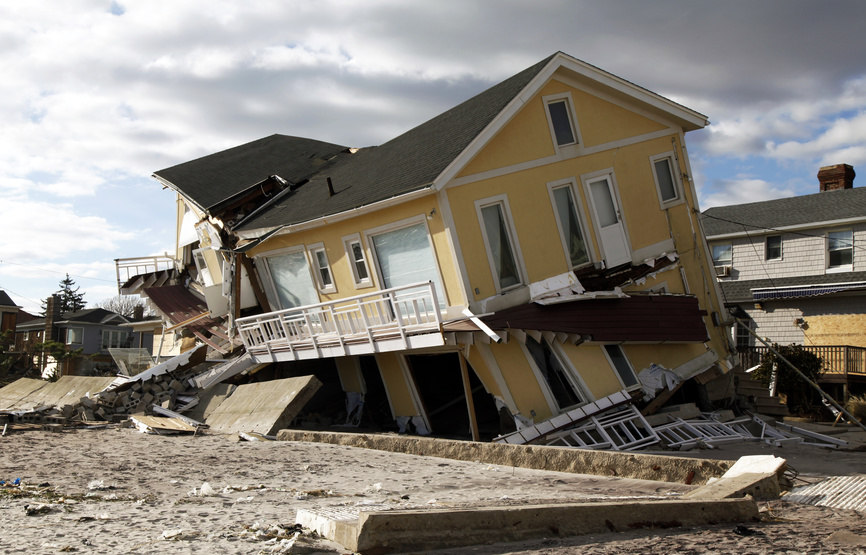
When you think about survival gear do you plan on using it to deal with natural disaster? Preppers have a strange fantasy that often involves a total collapse where they reach for a loadout of elaborate gear to survive the collapse.
What about regional disasters that happen on a regular basis? What about tornadoes and hurricanes?
These things happen every year and every year people are unprepared. That said, there are pieces of survival gear that might benefit you in the wilderness but will also benefit you when dealing with a natural disaster.
Lets look at a few situation specific situations and the gear to assist you.

Managing Fallen Trees

Most natural disasters bring down trees. It can be blizzards in the cold or hurricanes in the searing summer. Trees come down in disaster. These trees block roads, down powerlines and on occasion they need to be dealt with by homeowners.
In this case you are going to want access and fuel for a chainsaw. However, you might also want a high quality ax, hatchet and maybe even a folding saw to deal with branches.
You might think of these tools as something for building wild shelter but they are great for dealing with down wood and processing them down to be moved or used or another purpose.

Cordage and Tarps

Water is the enemy in a number of natural disasters. You need to have a means of shielding your home from rain if the home takes damage. One of the best ways to do this is using cordage and tarps.
You could use utility tarps for this or you could a rainfly for smaller holes.
Whether you store bank line or paracord, or both, you want to have lots of cordage both to use as survival gear and for natural disasters. This cordage is so vital. Tying down these tarps is the key to having success.

Light Sources

When the lights go out in a natural disaster, they go out for a while. Sometimes you get lucky and your power comes right back. If thats not the situation, then you need to be ablke to see at night.
Headlamps, high lumen flashlights and solar powered lights are great options for this.
You should also invest in some batteries to assure your lights are ready for the darkness.

Shemaghs

The shemagh is a piece of survival gear that really assists you after the strom has passed. Wahtever the natural disaster its good to have a means of dealing with the after affects.
The shemagh is large multiuse scarf that can assist you in a number of ways.
  • It can protect you from the sun
  • As a face cover it can keep you from breathing in dust and debris
  • It can be a sling to deal with injury
  • Worn wet it can actively cool you in a hot environment
  • Its a great backup swaddle for kids
  • You could also use it as a blanket for children
  • It can even be a preliminary water filter in the worst of cases
The shemagh is lightweight and highly effective. There is no reason not to have at least one for everyone in your family.

Repellents and Sunscreen

I don’t mean to poke fun but only a beginner would head off into the woods or face down a natural disaster without these two pieces of survival gear.
Granted, they are not a cool ax or a ferro rod but they are certainly going to go a long way in flooded areas when homes have been destroyed.
You might not look at something like sunscreen as a piece of survival gear but its as important as most other things. After hurricanes the sky clears up in a way that is very strange and the sun is absolutely relentless.
Most people just go back in their home but what happens if your home is gone, or the roof was taken? What happens if you are outside working in your neighborhood all day to aid in recovery?

Conclusion

If you think that survival cgear should be resered for that next wilderness adventure or an SHTF situation, youd be right! However, thats not all you want some quality survival gear for.
Do yourself a favor and start considering regional disaster. Regional disaster and natural disasters are as letitmate as anything else.
Every year people lose loved ones to run of the mill natural disasters. Stop shrugging them off and start storing survival gear for these disasters.

Comme

Wednesday, October 9, 2019

Test your Might; Embrace Cold Weather Survival


Campfire in wintertime, surrounded by snow.


Camp fire in winter time, surrounded by snow.

Let me start this article by stating the obvious. The cold is real. It will kill you fast. We are going to talk about self-imposed cold survival. If you are new to survival or don’t have refined skills in terms of packing, shelter making, and fire craft, be sure you don’t put yourself at risk in a cold-weather situation that might cost you your life. Instead, plan on a future cold-weather trip when you are better prepared. Again, the cold will kill you if you don’t have fire and you cannot get to shelter. Keep that in mind.
In all things, there is a balance of risk and reward. Practicing survival skills is no different.


(sponsor)
For a long time, I thought that as the cold weather moved in things like sleeping bags, tents, waders and fishing poles had to go up for the year. Maybe dust off the old 30-06 and do a couple hunting trips before tucking in for the winter, was my MO. My motto has since changed.
Perhaps it was the evolution of skills and confidence in those survival skills. Maybe it was confidence in my backup gear or it could have been the fact that I understand the land and its resources better than ever. Either way, its time to embrace cold weather survival. The learning season should never end.
While you might be wondering about the motivations behind cold weather survival and why anyone would abandon the wood stove for a dangerous night in the cold, well, it goes back to the risk/reward. In the cold, you will be tested in a much more extreme way. Your ability to make fire, find food, stay warm and survive in general will be tested in ways that warm summer nights by the campfire cannot mimic.
Its a true test of one's skills but you need to understand how dangerous it can be. For even the most seasoned you should maintain a quick escape to climate control. Don’t camp too far away from your car. Things can and will go wrong and you might need to get out of the are for life or death reasons.
The truth about the cold is that it will teach you the most about what you are lacking.

Friday, October 4, 2019

Wildfires and the Importance of your Go Bag


The apocalyptic photos that have appeared on the internet show Malibu awash in billowing smoke as the California wildfires ripped through surrounding counties. With wind gusts moving at 60 miles per hour the fire was able to move at an astounding pace and brought communities to their knees.
The destruction was hard to believe when viewed in pictures. Homes and cars were simply melted an obliterated. The fire burned an estimated 111,000 acres killing at least 31 people with nearly 230 missing. This from the Butte County sheriff's office. There were other fires in the area as well but it all brought the same thing to light.
When its time to go, you better be ready to go. Living in a society that is so cushy, we tend to be late or to push the envelope on time. It's rare that we meet a force that demands timeliness in action. With the fire it was very simple. You either get your family out of the path quickly or die. For all the bad press that preppers get, this is where the bugout bag makes sense.  Everyone affected by the fires either took advantage of their own bugout bags or left important things behind in the path of the fire.
While owning and advocating for guns is a slippery slope these days, its time we get real about the things we need when we leave our home in a disaster. A firearm is one of the most important. You are already a victim and people will look at you that way.
If you have qualms about guns you should build one. You should get to know how a firearm works on a more intimate level. You can purchase an 80 lower receiver and build your own weapon to store in a go-bag. You want that bag to contain everything you need to get out and stay safe while you are out.
The fires were quickly contained but what if they weren’t? Will the day come when the winds blow these fires all the way to the coast? In that moment you will be very glad you have that bag on your back. You do not want to find yourself in a shelter with nothing.
The earth has been very clear over the last 5 years. Mother nature is warning you that now is the time to take heed. Even if you don’t live in California, you are going to see a serious disaster and its going to affect your ability to get to safety.
Keep your family safe by building a full scale go bag and settling on a serious bugout plan.

Thursday, September 19, 2019

Three Survival Items That Never Fail


We have all watched in horror as a piece of our trusted survival gear breaks. We have all watched attachments break, blades snap and even handles crack. It happens. Most of the time it happens on a camping trip with little risk. Thank God for that! Still, it has a serious affect when it happens.
Instantly, you are transported to a place and time where that piece of gear is all that separates you from disaster. It’s a terrifying thought. It calls into question the quality of your gear and how you handle and maintain it.
What survival items can you add to your setup that never fail? Well, there are plenty, but three come to mind. These three will not only stand up against survival they will also make the biggest impacts on a survival situation.

Bank Line

For a long time, the survival cordage space was dominated by paracord or 550 cord. There was no getting away from this stuff. It became the ultimate in survival cordage primarily for its tensile strength and the 5 smaller strands of cordage that were inside of each strand.
I don’t want you to think that there is an epidemic of paracord failures. That is not why I am bringing it up. There are other alternatives and when it comes to cordage, bank line is less bulky and weighs about half as much as paracord. Now, that should get you excited.
Bank line can be purchased with vary degrees of tensile strength. It’s a finer cordage than paracord but its very strong. Bank line takes up much less space than paracord and that space savings is exponential as you increase the amount of cordage you carry. You can grab a 100-foot spool of quality bank line for about $4 or less.
No matter the situation you face, a spool of quality bank line can make you shelter, catch your food and stand the test of the outdoors.
Ferro Rod
If you go overboard in a canoe, if you roll down a steep embankment, if you find yourself in the throes of some situation that separates you from your gear or treats your gear to some blunt force trauma, the ferro rod will be there.
Aside from a modern lighter or a piece of flint and your survival knife, the ferro rod is the most dependable and fast acting fire starter there is. If you are looking for a fire-starting companion that will not fail you, invest in a nice thick ferro rod. Don’t buy one of the thinner rods.These can break easily. buy a 1 high quality ferrorod that will last.
Aside from the fact that it will never fail to shoot sparks, even if it’s wet you can just dry it off, the ferro rod is also going to lastyou a very long time. If you have efficient tinder making skills and you understand how to build and sustain a fire, you might only need a few scrapes on that ferro rod to make it work.
Imagine how long a ferro rod will last you if you scrape it a few times for each fire. This is why the ferro rod is one survival item that will never fail you. You ask it to bring sparks and it will do that over and over again.

Bug Spray

Now, maybe you think I should bring you some impressive type of survival tool for the third item that will not fail you. A few come to mind. I could mention things like short handled axes or maybe something for creating shelter.
Its pretty clear that water, shelter and fire are the three most important parts of any survival situation. So, you might be asking yourself: why are you talking about bug spray?
Lots of survivalists get wrapped up in this idea of gear. They get to the point where they are wading in gear. However, things like sunscreen and bug spray are often left out. Could it be that these two items are just not exciting enough? They aren’t as cool as more modern survival gear?
Bug spray can make all the difference in a survival situation. If you are truly lost and trying to find your way out of the woods, you are going to need to be alert and awake. Sleeping in the woods, under a lean-to is challenging enough. Imagine getting bit by bugs all night, too! You can bet you will be groggy and tired come morning.
After a few days of hiking, without sleep, you will not be able to focus and getting out of the woods safely will become much harder.
Bug spray will never fail you. It is a powerful item that is light and easy to carry. There are many derivations of it but even some store-bought product will put an end to the gnats flying into your eyes or the biting mosquitos. Even bugs scurrying over you in the night can be brutal, if you aren’t used to it.
While the gear out today is impressive don’t forget about keeping the bugs and the sun at bay.

Conclusion

Of course, there are many other items that could be mentioned but I think these three offer up the benefits, the reliability  the sweeping power to affect survival on many levels.
For the most part a serious rifle for hunting is another piece of gear that is rarely going to fail you. Take into account that you could even build that weapon from a simple 80 percent lower and then you know how to fix it even if it breaks!
That’s the type of mentality we all need to focus on. Even if these great tools fail us, can we fix them?

Sunday, September 15, 2019

Survival Gear for Natural Disasters


When you think about survival gear do you plan on using it to deal with natural disaster? Preppers have a strange fantasy that often involves a total collapse where they reach for a loadout of elaborate gear to survive the collapse.
What about regional disasters that happen on a regular basis? What about tornadoes and hurricanes?
These things happen every year and every year people are unprepared. That said, there are pieces of survival gear that might benefit you in the wilderness but will also benefit you when dealing with a natural disaster.
Lets look at a few situation specific situations and the gear to assist you.

Managing Fallen Trees

Most natural disasters bring down trees. It can be blizzards in the cold or hurricanes in the searing summer. Trees come down in disaster. These trees block roads, down powerlines and on occasion they need to be dealt with by homeowners.
In this case you are going to want access and fuel for a chainsaw. However, you might also want a high quality ax, hatchet and maybe even a folding saw to deal with branches.
You might think of these tools as something for building wild shelter but they are great for dealing with down wood and processing them down to be moved or used or another purpose.

Cordage and Tarps

Water is the enemy in a number of natural disasters. You need to have a means of shielding your home from rain if the home takes damage. One of the best ways to do this is using cordage and tarps.
You could use utility tarps for this or you could a rainfly for smaller holes.
Whether you store bank line or paracord, or both, you want to have lots of cordage both to use as survival gear and for natural disasters. This cordage is so vital. Tying down these tarps is the key to having success.

Light Sources

When the lights go out in a natural disaster, they go out for a while. Sometimes you get lucky and your power comes right back. If thats not the situation, then you need to be ablke to see at night.
Headlamps, high lumen flashlights and solar powered lights are great options for this.
You should also invest in some batteries to assure your lights are ready for the darkness.

Shemaghs

The shemagh is a piece of survival gear that really assists you after the strom has passed. Wahtever the natural disaster its good to have a means of dealing with the after affects.
The shemagh is large multiuse scarf that can assist you in a number of ways.
  • It can protect you from the sun
  • As a face cover it can keep you from breathing in dust and debris
  • It can be a sling to deal with injury
  • Worn wet it can actively cool you in a hot environment
  • Its a great backup swaddle for kids
  • You could also use it as a blanket for children
  • It can even be a preliminary water filter in the worst of cases
The shemagh is lightweight and highly effective. There is no reason not to have at least one for everyone in your family.

Repellents and Sunscreen

I don’t mean to poke fun but only a beginner would head off into the woods or face down a natural disaster without these two pieces of survival gear.
Granted, they are not a cool ax or a ferro rod but they are certainly going to go a long way in flooded areas when homes have been destroyed.
You might not look at something like sunscreen as a piece of survival gear but its as important as most other things. After hurricanes the sky clears up in a way that is very strange and the sun is absolutely relentless.
Most people just go back in their home but what happens if your home is gone, or the roof was taken? What happens if you are outside working in your neighborhood all day to aid in recovery?

Conclusion

If you think that survival cgear should be resered for that next wilderness adventure or an SHTF situation, youd be right! However, thats not all you want some quality survival gear for.
Do yourself a favor and start considering regional disaster. Regional disaster and natural disasters are as letitmate as anything else.
Every year people lose loved ones to run of the mill natural disasters. Stop shrugging them off and start storing survival gear for these disasters.

Sunday, September 8, 2019

Delicious Fruit Smoothie Recipes – Quick and Frugal

These Delicious Fruit Smoothie Recipes – Quick and Frugal … Plus they are packed with nutrients and vitamins. 

Here is why this smoothie is amazing: Collard Greens – full of fiber & helps your body digest foods. Consuming them raw maintains their nutrients. Cancer-fighting. Bananas: Potassium & b vitamins. Berries: Vitamin C/Fiber rich. Walnuts: Good fats & Omega 3’s. Ginger: Increases circulation & much more. 

1. Blueberry Ginger Swirl Smoothie

Ingredients:

1 cup Kale, 1 Banana, 1 Mandarin, Handful of Blueberries, a small piece of Ginger Root, 1 tsp. Almond Butter. Add Coconut Milk & Enjoy.

2. Almond Butter Banana Zinger Smoothie

Ingredients: 1 cup Spinach, 1 Banana, 1 Mandarin, 1 tsp. Almond Butter, A few Hazelnuts, A small piece of Ginger Root, 2 tsp. Cocoa powder. Add Coconut Milk. Blend & Enjoy

3. Tropical Storm Smoothie

Ingredients:

Kale, Banana, Strawberries, Frozen Pineapple, Coconut Flakes, Piece of fresh Ginger Root, Add Almond Milk & Enjoy!

4. Blueberry Peach Spinach Surprise

Ingredients:

1 cup spinach, a handful of blueberries, banana, 5 frozen peach slices, a handful of walnuts. Add almond milk. Blend and Enjoy!

5. Super Energizer Smoothie

Ingredients:

1 cup shredded Collard Greens 1 Banana, Handful of fresh blueberries, 3 Strawberries, 5 Frozen Mango Cubes (Oranges/Pineapple/Clementines would work too) Walnuts Piece of fresh ginger. Add Almond Milk. Blend and Enjoy!

6. Banana Strawberry Kale Blend Smoothie

Ingredients:

1 cup spinach, 2-3 kale leaves, 1/2 banana, 4 strawberries, 1/2 avocado, 3 dates, 1 tsp peanut butter. Add coconut water and water. Blend and Enjoy!

Monday, August 19, 2019

Going into the wild with only the clothes on your back and surviving for any extended period of time is not nearly as easy as Hollywood makes it out to be. In fact, it is extraordinarily difficult, and most people would die from exposure to the elements, dehydration, or any number of other causes in a matter of days.
Just because surviving in the wild is extremely difficult doesn’t mean it’s impossible – you just have to have the right skills. Below, we’ll cover seven bushcraft skills that are absolutely necessary if you want to survive in the wild. These are skills that can help you survive in the wilderness and a wide range of other scenarios.
Even with tons of practice, starting a fire with a bow drill isn’t going to be easy, especially if the conditions are less than ideal. However, since fire is such a necessity for survival in the wild, you should know how to start one using the bare minimum number of tools. If you can reliably start a fire with a bow drill, starting one with a flint striker, lighter, or anything else you might have available will be no problem.
To learn how to start a fire using a bow drill, check out this video.

2. Navigation

By far the most common scenario where you might be forced to survive in the wild is getting lost in the wilderness. Therefore, one of the best wilderness survival skills that you can have is knowing how to find your way out.
Of course, having advanced knowledge of the area as well as tools such as maps, a compass, or even a GPS is ideal. But what if you don’t have these things? If you somehow end up in the woods with no idea of where you are and no tools for navigation, you’ll have to rely on much more primitive navigation techniques.
You can use celestial bodies such as the sun and north star to orient yourself without a compass and figure out the direction you are heading. If you aren’t sure which direction you need to be heading, though, your best bet is to head downhill until you find a creek or river and follow it.
If you aren’t lucky enough to find a river, you’ll need to know how to spot and follow game trails, since these trails will likely lead to a river if there’s one around.
Learn how to use navigation tools such as a compass and learn how to navigate without them as well so you’ll be able to find your way out of the wilderness no matter what knowledge of the area or tools you have available.
For more information on navigating without any tools, check out this article.

3. Shelter Building

Exposure to the elements can kill you just as quickly as anything else in the wilderness – whether it’s wind and rain that causes hypothermia or blistering sunshine and heat that causes a heatstroke.
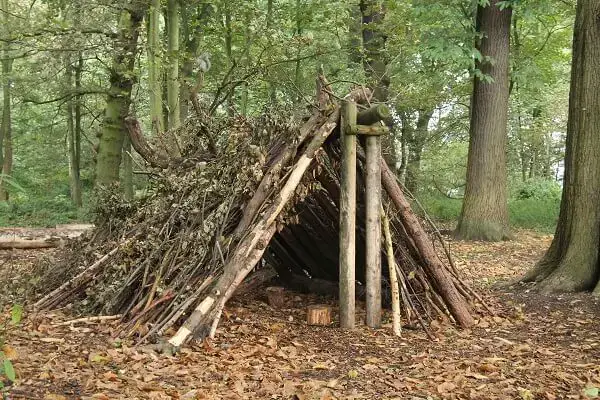
Human beings just weren’t made to live outside of shelters, and if you want to survive in the wilderness, you’ll need to know how to build one. Depending on where you are located and the materials you have available, building a shelter may take a number of different forms.
If you’re in the frozen tundra, an igloo might be your best bet. In the woods, you’ll want to build a makeshift lean-to out of tree limbs, and in the desert, your best shelter is probably going to be one you find rather than one you build such as a cave or an animal burrow that you widen out.Whatever the situation demands, though, you’ll certainly want to know how to build a shelter that can protect you from the elements if you hope to survive for an extended period of time.
To learn how to build nine different types of survival shelters, check out this article.
Bushcraft Shelter

4. Finding Edible Plants

It may sound counter-intuitive, but food typically isn’t the first concern for someone trying to survive in the wilderness. Most people can survive about three weeks without food, but you’ll only be able to survive a few days without water and even less time than that without fire and/or shelter if the conditions are too extreme.
With all of that said, food is still incredibly important for one huge reason: energy. You may be able to go three weeks without food before you die from starvation, but just a few days without food will likely leave you too weak perform any of the other tasks necessary for your survival.
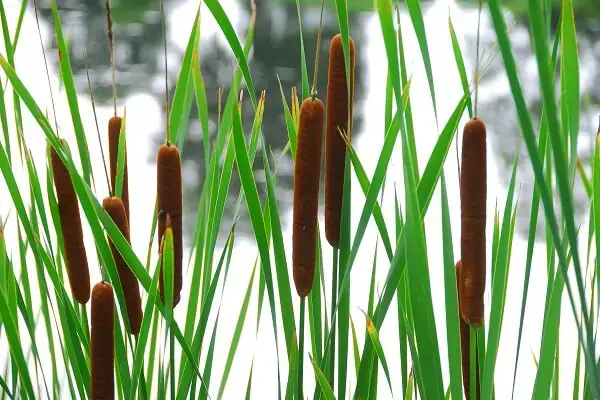
To find food in the wilderness, one of the best skills you can have is the ability to identify edible plants. There may be quite a few edible plants available depending on where you are located, but since many plants are poisonous and many others offer no nutritional value, it is essential that you have an in-depth knowledge of the plants in your area if you hope to survive off of them in the wilderness.
For a list of eleven different edible plants that can be commonly found in wildernesses across the United States, check out this article.
Wild Cattails

5. Fishing

Aside from finding edible plants and perhaps edible bugs such as grasshoppers, the only other realistic shot you’ll have at getting food in the wilderness is fishing. Hunting for even small game is just too difficult without any type of projectile weapon.
Trapping game is a possibility if you are able to find a well-used game trail and can place a covered pit in the middle of it. Even if you do find a game trail, though, trapping is a matter of luck and will take quite a bit of time and effort. Without a game trail and without any kind of bait, you’ll just be wasting your energy.
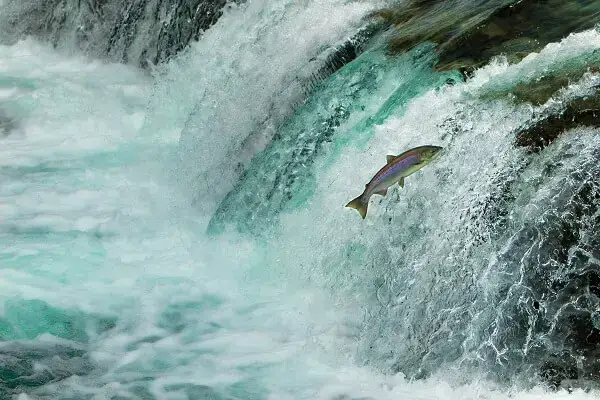
If you find a water source, though, fishing is much more doable. There are several methods you can use to catch fish without any gear or supplies, and you’ll want to be adept at all of them since the best one to use will depend on where you are and the type of fish you are going after.
If the water is shallow and the fish are abundant, you can spearfish using a stick that you carve to a point. For less shallow or less abundant waters, craft a makeshift fishing line using whatever you have available such as paracord or even fabric from your clothing, as well as a makeshift hook using a bit of wire, a piece of bone, or whatever you can construct into a J shape and sharpen to a point.
Once you have these two things, you can use insects as bait and tie your lines to trees and bushes near the water. Or, if you have the time, you can make a pole out of a tree limb and use it to fish with in order to decrease the chances of a fish getting loose before you have a chance to check your lines.
To learn more about fishing for survival without any gear or supplies, check out this article.
Salmon Jumping Waterfall

6. Finding and Purifying Water

This is one of the most important skills. You can only survive a few days without water, and possibly less if it’s hot outside and you’re sweating a lot of you hike your way through the wilderness or work hard building fires and shelters.
The trouble you have finding water will depend a lot on the climate. If you’re in the desert, water will be very hard to find, but not impossible. In other places, you might have trouble taking two steps without getting your feet wet.
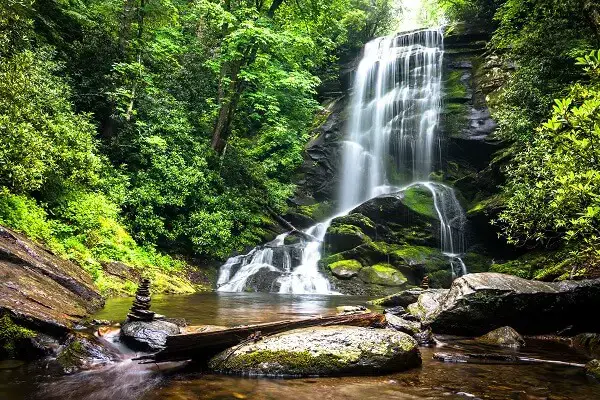
Even if you do find water, you have to be careful to purify it before you drink it. Contaminated water could make you sick, causing you to become even more dehydrated. If you have a fire and a metal container, you can boil it. You could also try distillation, sedimentation, solar stills, evaporation traps, and a number of other methods.
To learn how to find water in the wilderness, check out this article. To learn how to purify water in the wilderness, check out this article.
Wilderness Waterfall

7. First Aid

If you’re trying to survive in the wilderness, it’s a matter of “when” you get injured, not “if”. Minor cuts and bruises are guaranteed, while more serious injuries such as sprains or even broken bones are concerningly likely. You’ll need to know how to properly treat each one in a makeshift manner using the supplies you have available if you want to keep these injuries from holding you back or potentially even killing you.
This entails knowing things such as how to craft a splint using tree limbs, how to make a tourniquet out of your belt or clothing, how to bandage a wound using strips of clothing, and more.

Thursday, June 27, 2019

A day in the woods will help you get perspective

If you could step outside of your life for a moment, and look at it objectively, you could create a pie chart of how you spend your time and other resources. You could create another pie chart of what your output is. You would find that almost all of your resources are spent on things that are of very little worth.

Strong statement? Yes. Valid? Probably. Proof? Pack up your family (if you have one) and head to the woods. If you can, go to a place where there isn't an established campsite. Pack only what you can carry. You should be able to learn a lot from just a 24 hour trip.

Here are some things that you might learn:
1. You need water, and water is very hard to come by.
2. You need food, and food is very hard to come by.
3. You need shelter, and shelter is very hard to come by.
4. It takes almost all your time to secure what you need to survive.

REALITY BITES
Technology empowers us to do many things we could otherwise not do. It frees up time and provides many resources. Most of us use this windfall to mask who we really are instead of improve who we really are. In the woods, all the illusions are taken away, and we are left in our base state.


In the wilderness, you are perpetually:
  • Hungry.
  • Stinky.
  • Dirty.
  • Tired.
  • Cold.
  • Hot.
  • Sun-baked.
  • Sore.
  • Wounded.
  • Working.

What will this situation expose about your true character as it stands today? Odds are you will be:

  • Selfish.
  • Angry.
  • Irrational.
  • Scared.
  • Lazy.

Who are you, really? Who you think you are may be very different from who you actually are. Strip away all the illusions made possible by modern technology. Who remains? Who are you in your worst moments? How much do you really care about others? That is the real you. Unless you are exceptional, the real you might be a monster. What are you doing about that?

THE TIME IS COMING
When your trip is over, you will return to your home. You may notice some of the things you previously took for granted.

The time is coming when society may be reduced to the state you voluntarily immersed yourself in for just 24 hours. There is nothing you can do to stop that. But you can prepare now for that day, and in doing so will be better equipped to appreciate it, benefit from it, and help others to do the same.

PREPARING SPIRITUALLY
Can you call down miracles? If you can't, you are very unlikely to survive. Do you know God? Are you reliant on things and people that will not be around when things collapse (church, church leaders, the internet)?

PREPARING EMOTIONALLY
Can you keep yourself together and be happy in a primitive state? Can you keep morale high even when things are tough? What do you do when someone is dying from an infection? Can you hold yourself together when someone you care about has an emergency and needs you to calmly help them?

PREPARING PHYSICALLY
Can you physically labor all day without prescription drugs, chocolate, alcohol, caffeine, or any other thing that isn't available in a primitive situation? Can you walk all day with 100lbs on your back through the woods?

PREPARING MENTALLY
Do you have the skills required to survive? Do you know how to start a fire? Do you know how to chop down a tree? Do you know how to find and clean water? Can you build a shelter without modern tools?

PREPARING GEOGRAPHICALLY
You will need to be in a place where you have access to clean water, you are away from other people, have access to food, and can create a physical environment that can sustain life. Almost all Americans live in a place where this is not possible. This doesn't mean you should move right now (though it might), but it does mean that anything you buy to prepare should be limited to what you can carry in a backpack, because you will be walking very far.

PREPARING GEAR AND ADDRESSING FEAR
Vast sums can be spent in trying to maintain the illusions of modern life through a collapse. Don't be suckered by this lie. No amount of money can buy security in that day. A good knife, a fire starter, a cold weather sleeping bag, a sleeping mat, a large pack, a camel back, a four season tent (if you have a family, you can distribute the load among multiple packs), and a water filter are all good things to have whether or not the world ends, but anything you can't carry with you is very unlikely to make a difference in the event you actually need it. The primary reason for this is geographic location: almost everyone in the United States would have to travel by foot to get away from where they presently live in the event of a collapse. If you have surplus money left after obtaining a basic gear load, the best thing to do with it is to transfer it into time. Spend that time learning what you can, developing character traits in yourself and in your family members, and helping other people.

Note: God will direct some people to specific locations and give them specific instructions when it comes to preparing a place of refuge where others will be directed to go. Do not use the above advice to serve as a reason to disregard whatever God tells you to do. Whatever God commands is right.

WHAT THIS MEANS AND WHAT IT DOESN'T MEAN
Nothing I've said here should be interpreted as a call to sell what you have, give to the poor, and go live in the woods. On the one hand, your house doesn't matter, your hobbies don't matter, your job doesn't matter--in and of themselves, anyway. All these things only matter inasmuch as they provide you with time and other resources to learn more from God than you otherwise could, become a better person than you otherwise could, and help others more than you otherwise could. But we don't use our resources this way. Instead, we use them to block out the most important things every day.

The inner voice is quiet. It doesn't normally intrude upon your attention without your desiring it. The quest of your life is to develop the song that the inner voice is singing, and conform your character to it. It is to bring about a life reconciled to the light God gave you while obtaining the additional light he wills to give you. It is to discover and walk the path God has provided for you to obtain the deepest desires of your heart. Almost all aspects of almost every life are designed to and used to block this purpose rather than catalyze it.

Here are some implications for your life:
How much of your life is spent on things that are of no worth? When the illusion is ripped away, what is left? What is your character like? What is your capacity to bless others when money, technology, and everything you've accumulated is gone? How are you using these things in the meantime?